Many parents who are looking into martial arts come to us with the same concern, often spoken quietly and with a hint of guilt:
“My child is smart and kind… but they fall apart when things get hard.”
They see it when homework becomes frustrating.
When emotions spike quickly over small setbacks.
When their child avoids challenges or gives up the moment something feels uncomfortable.
This worry isn’t about toughness.
It’s about resilience — the ability to stay steady when life doesn’t go smoothly.
And here’s the most important thing for parents to understand:
Resilience is not something a child either has or doesn’t have.
It is something that can be taught.
At Samurai Inti Martial Arts, we see this transformation every day. Kids who once shut down, avoided effort, or reacted emotionally learn how to stay present, try again, and believe in themselves — not because someone told them to, but because they experienced it.
Children today are not weaker than past generations — they are simply growing up in a very different environment.
Many kids experience:
While all of this comes from good intentions, it creates an unintended consequence:
fewer opportunities for children to practice staying calm and engaged when something feels hard.
Resilience is like a muscle.
If it’s never challenged, it doesn’t grow.
That doesn’t mean kids need harsher discipline or pressure.
It means they need safe, structured challenges that teach them how to move through difficulty instead of avoiding it.
When people hear the word grit, they often imagine toughness, stubbornness, or pushing through at all costs.
That’s not what we’re talking about.
Healthy grit looks like:
In other words, grit is emotional stamina.
It’s the ability to stay engaged with life when things don’t go your way — and it’s one of the most important skills a child can develop.
Most parents try to build resilience through encouragement:
“You’ve got this.”
“Just try harder.”
“Don’t give up.”
Encouragement is important — but on its own, it doesn’t teach a child how to handle frustration.
Without practice, kids don’t automatically know how to:
These are skills, not personality traits.
And skills are learned through experience.
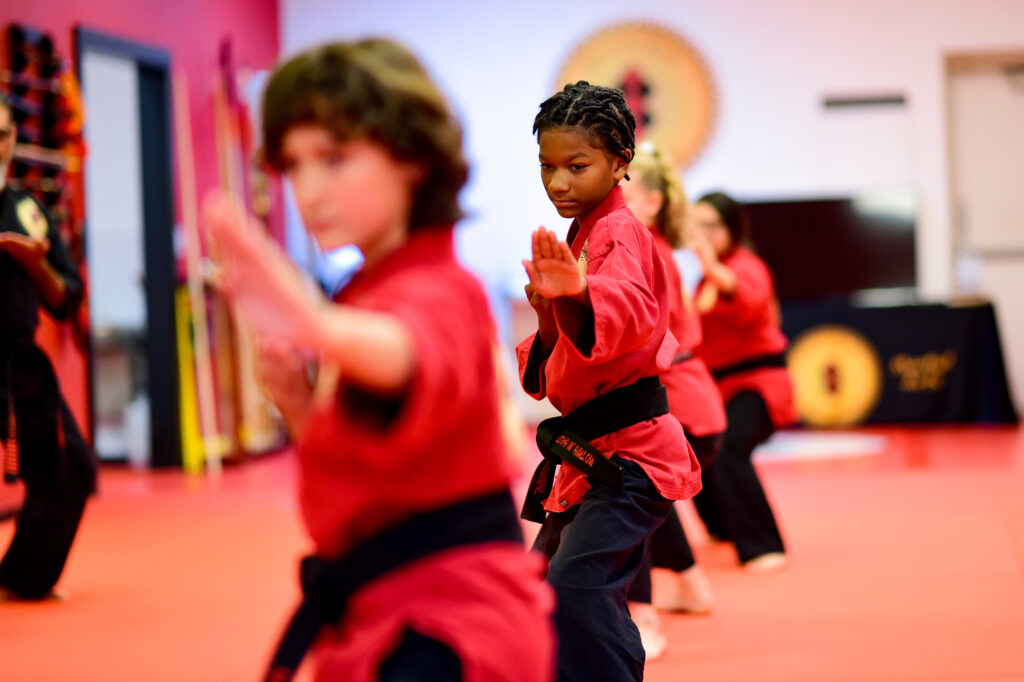
At Samurai Inti, resilience isn’t taught through yelling, pressure, or fear.
It’s built gradually through structure, repetition, and guidance.
In class, kids are asked to focus, listen, and try movements that don’t work perfectly the first time. This creates mild, manageable discomfort — exactly the kind that builds growth.
They learn that feeling frustrated doesn’t mean something is wrong.
It means they’re learning.
Kids miss techniques.
They forget steps.
They struggle.
Instead of being embarrassed, they’re guided to reset and try again. Over time, mistakes lose their emotional charge.
This is powerful for kids who fear failure.
When frustration appears — and it always does — instructors help students pause, breathe, and regain control before continuing.
This trains the nervous system to calm itself, which is the foundation of resilience.
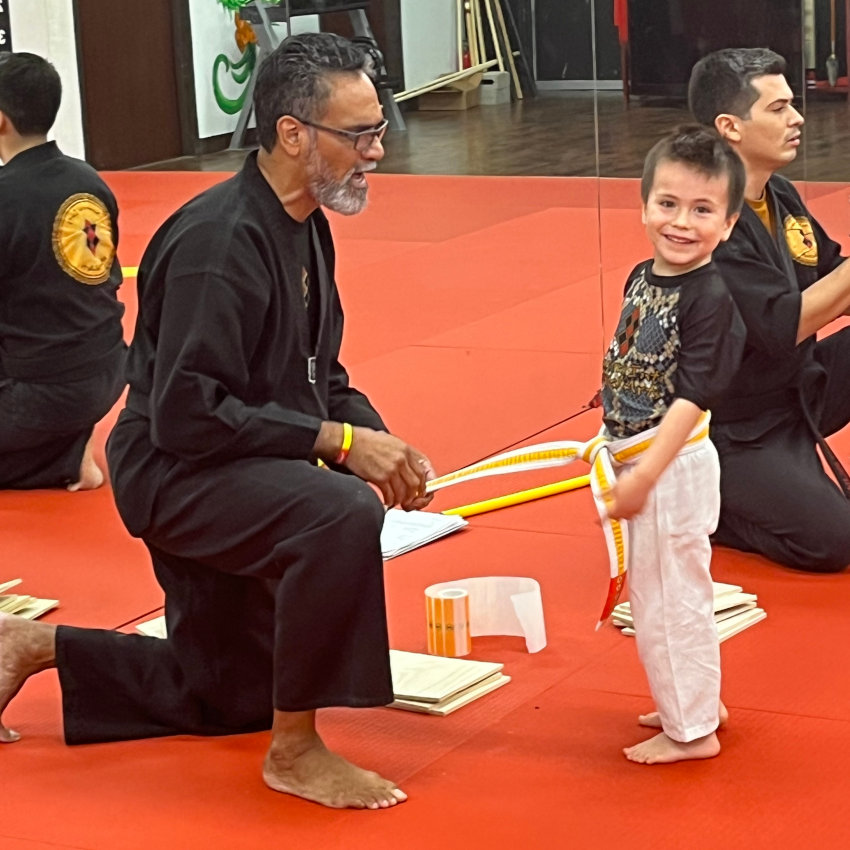
Belts and stripes are not given for talent or speed. They are earned through showing up, putting in effort, and staying committed.
Kids experience firsthand that persistence leads to progress.
Slowly, something shifts.
They stop asking, “What if I mess up?”
And start believing, “I can figure this out.”
Not all struggle builds resilience.
Too much pressure shuts kids down.
Too little challenge leaves them unprepared.
The key is healthy challenge with support.
At Samurai Inti, instructors are trained to meet kids where they are — encouraging effort without comparison, and pushing growth without shame.
This balance creates resilience that feels empowering, not overwhelming.
If your child struggles with frustration, avoidance, or giving up easily, the most powerful way to understand this process is to see it for yourself.
Book a free intro class that includes a free uniform and let your child experience healthy challenge in a supportive, heart-centered environment.

Parents often notice changes before they expect to.
They tell us their child:
Why?
Because resilience transfers.
A child who learns to reset after missing a technique can reset after missing a test question.
A child who learns patience during training learns patience with siblings.
A child who learns to stay calm under pressure learns to do the same at school.
This is why martial arts becomes more than an activity — it becomes life training.
Talent can open doors, but resilience is what keeps them open. Kids who develop real grit are more likely to push through academic challenges, handle social pressure with steady confidence, and bounce back from setbacks without losing their sense of self-worth. Most importantly, they start to believe they can grow and improve — and that mindset shapes how they approach life long after childhood.
One of the biggest misconceptions about resilience training is that it requires harsh discipline. In reality, resilience grows best when children are supported by clear expectations and consistent structure, while still feeling emotionally safe and guided by encouraging mentors. That’s how kids become truly strong—without becoming hardened.
When evaluating programs for your child, it’s worth asking:
Martial arts taught with intention answers yes to all of these.
If you want your child to:
Book a free intro class that includes a free uniform at Samurai Inti Martial Arts in Frisco.
This is where children learn that difficulty is not something to fear —
and that they are capable of more than they think.
Comments are closed